
*This post may contain affiliate links for which I earn commissions.*
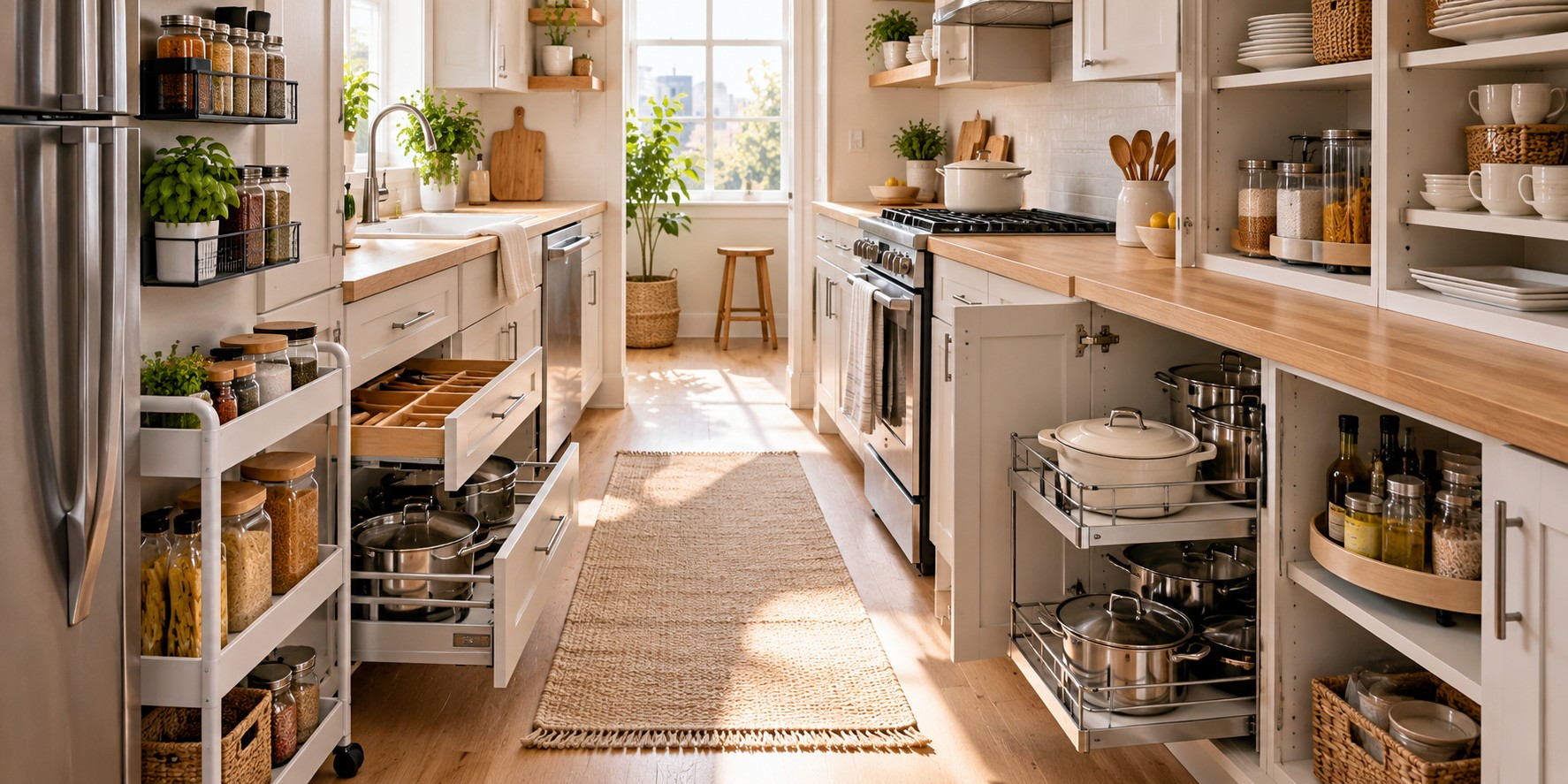
Before adding another storage piece, look at the space you already have. Cabinet interiors, drawer depth, unused wall space, and narrow gaps can often hold much more with a few simple adjustments.
The goal is to create a more organized, efficient small kitchen using the storage space that’s already there, without adding cabinetry or taking on a renovation. Pasted text
Quick Supply List
You won’t need every item on this list. Choose the organizers that solve the specific problems in your kitchen.
- Cabinet shelf risers: Look for sturdy, shallow risers that fit comfortably between existing shelves.
- Pull-out cabinet organizers: Measure cabinet width, depth, and door clearance before buying.
- Lazy Susan turntables: Low-sided versions work well for oils, sauces, spices, and pantry staples.
- Drawer dividers: Adjustable designs are easiest to fit into different drawer sizes.
- Magnetic storage racks: Useful on refrigerators or other magnetic surfaces for lightweight kitchen essentials.
- Slim rolling carts: Look for narrow models that can fit beside appliances or at the end of a cabinet run.
- Stackable pantry bins: Straight-sided clear or open-front designs usually make the best use of shelf space.
- Over-door organizers: Choose a shallow design that won’t stop the door from closing properly.
Product Suggestions

Click Image To View

Click Image To View

Click Image To View
Start by working through one area at a time. Emptying the entire kitchen at once usually creates more work than necessary.
Before adding organizers:
- Remove expired food, duplicate utensils, and anything you rarely use.
- Group similar items together so you can see how much space each category actually needs.
- Measure cabinets, drawers, doors, and narrow gaps before buying storage products.
- Keep frequently used items between waist and eye level whenever possible.
- Reserve awkward high or low spaces for things you don’t need every day.
It’s also worth leaving a little empty space. A cabinet packed tightly from edge to edge may technically hold more, but it usually becomes harder to use.
How to Do It
- Add a Second Level Inside Cabinets
Tall cabinet shelves often leave several inches of unused space above plates, bowls, mugs, or pantry items.
Place a shelf riser inside the cabinet to create another level. Use the lower section for everyday dishes and the upper level for smaller items that would otherwise be stacked on top of one another.
Why this works: You’re using the cabinet’s height rather than adding another piece of furniture to the room.
- Turn Deep Cabinets Into Pull-Out Storage
Deep lower cabinets can hide half their contents behind the first row of items.
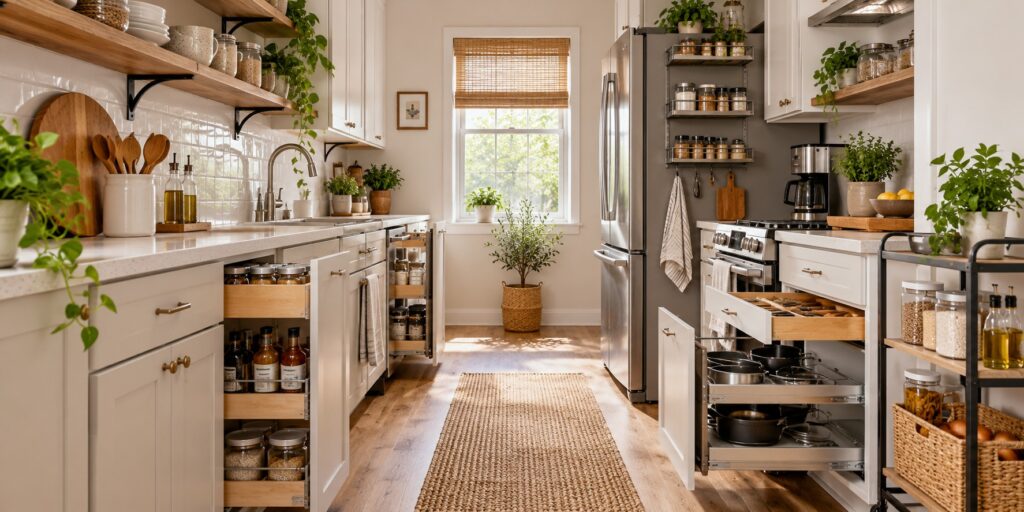
A pull-out organizer lets you slide everything forward instead of crouching down and reaching into the back. They’re especially useful for pots, pans, cleaning supplies, baking ingredients, and food containers.
Measure carefully so the organizer clears hinges and plumbing.
- Use Turntables in Awkward Corners
Corners inside cabinets can quickly become dead space.
A Lazy Susan keeps jars, oils, condiments, spices, and small pantry goods within reach. Instead of moving three items to reach the one at the back, you simply rotate the tray.
Round turntables also work surprisingly well inside rectangular cabinets when the corner would otherwise be difficult to use.
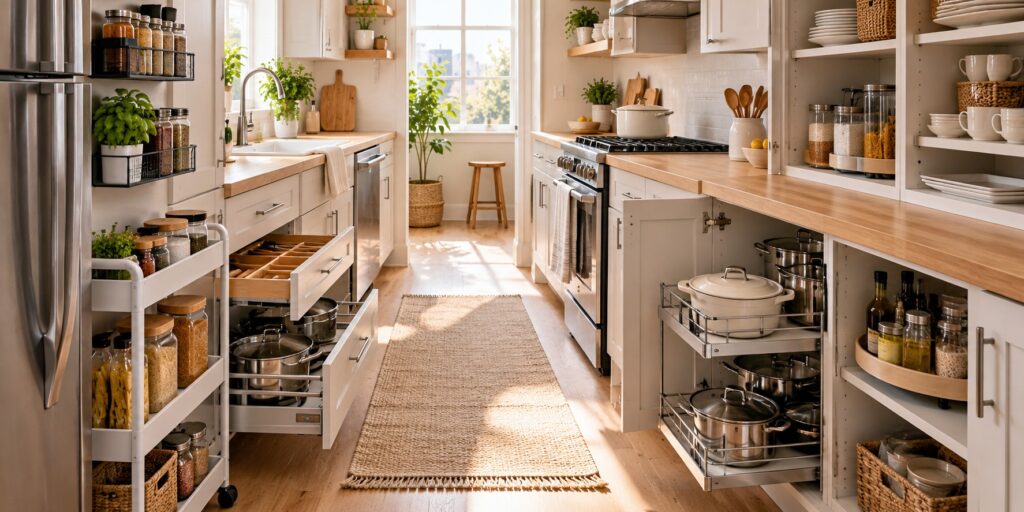
- Divide Drawers by What You Actually Use
Large drawers often become catch-all spaces because everything is allowed to move around.
Use adjustable dividers to create sections for cooking utensils, baking tools, measuring spoons, towels, or food-storage accessories.
Don’t create more sections than you need. A few generous zones are often easier to maintain than a grid of tiny compartments.
- Use the Side of the Refrigerator
If the refrigerator has an exposed magnetic side, it can become useful vertical storage.
A slim magnetic rack can hold spices, wraps, kitchen towels, small utensils, or lightweight pantry items. Keep heavier objects lower and avoid loading the surface with too many pieces.
This works especially well in galley kitchens where open wall space is limited.
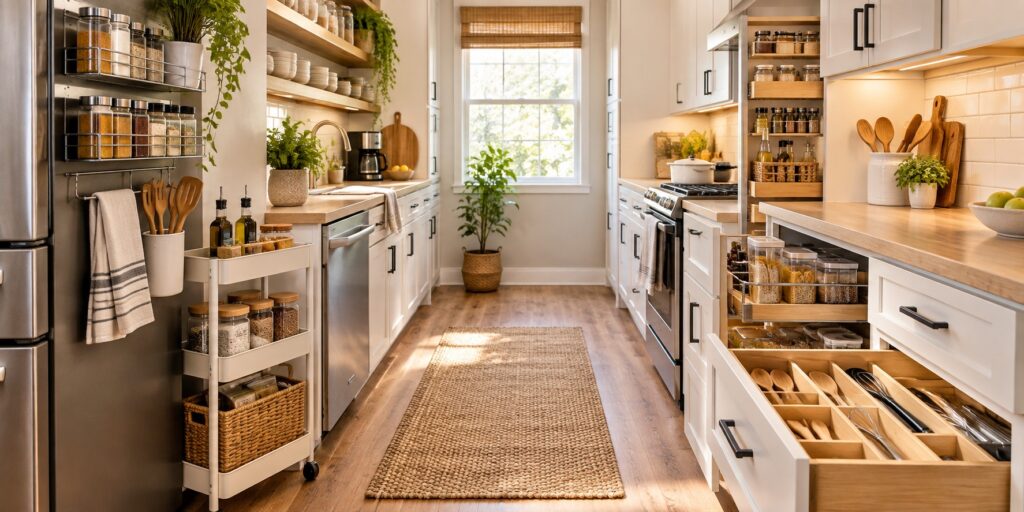
- Slide a Narrow Cart Into an Awkward Gap
Look at the spaces beside the refrigerator, at the end of a cabinet run, or between freestanding furniture.
A slim rolling cart can turn a narrow gap into storage for pantry staples, baking supplies, cleaning products, or bottled drinks.
Choose a cart that’s easy to pull out fully. If it only moves halfway before hitting another cabinet or appliance, it will quickly become frustrating.
A Few Tools That Make This Easier
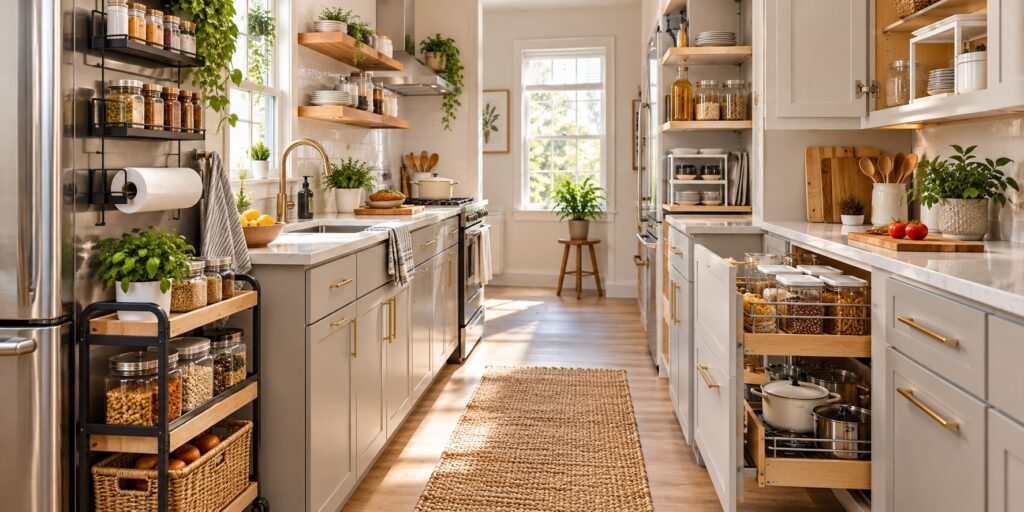
Some organizers are particularly useful when you’re trying to increase storage without changing the kitchen itself.
- Pull-out cabinet organizers make deep lower cabinets easier to reach.
- Slim rolling carts use narrow gaps without permanently filling them.
- Stackable pantry bins help create clear categories on open or deep shelves.
- Magnetic racks provide storage without drilling into walls or cabinets.
Product Suggestions

Click Image To View

Click Image To View

Click Image To View
- Stack Pantry Storage Instead of Spreading It Out
Pantry shelves often lose space because short packages sit beneath a large area of empty shelf.
Use stackable bins to create vertical storage. Keep similar items together, such as snacks, baking ingredients, breakfast foods, or canned goods.
Clear bins make it easier to see what’s running low without pulling everything out.
- Use the Back of a Door
A pantry or utility door can hold a surprising amount without using any floor or counter space.
A shallow over-door organizer can store packets, wraps, cleaning supplies, reusable bags, smaller pantry items, or kitchen linens.
Before buying one, check that the organizer and its contents won’t hit nearby shelves when the door closes.
- Move Rarely Used Items Up High
Upper shelves aren’t ideal for everyday dishes, but they’re useful for serving bowls, specialty baking tools, extra glassware, and appliances used only occasionally.
Move these items upward and give the easy-to-reach shelves to things you use every day.
This simple switch can make the kitchen feel more functional without adding a single organizer.
- Keep Counters for Daily Essentials
Small kitchens can feel cluttered quickly when the countertop becomes overflow storage.
Try limiting the counter to items used almost every day, such as a coffee maker, kettle, or utensil container. Move occasional appliances and ingredients into cabinets or onto a cart.
The kitchen doesn’t need completely empty counters. It just needs enough open workspace to prepare food comfortably.
- Store Items Near Where You Use Them
Organization works better when the placement follows the way you cook.
Keep cooking utensils near the stove, mugs close to the coffee setup, cutting boards near the food-prep area, and food containers near the refrigerator or cleanup zone.
This reduces the amount of moving back and forth in a small kitchen, which makes the space feel easier to use.
Why this works: Good organization isn’t only about fitting more inside cabinets. It’s also about making everyday tasks require fewer steps.
- Give Every Storage Area One Clear Job
It’s tempting to squeeze whatever fits into an available cabinet, but mixed-purpose storage often becomes messy again quickly.
Give each drawer, shelf, or organizer a simple role. One shelf might hold breakfast foods, one drawer cooking tools, one cart baking supplies.
Clear zones make it easier to put things away and easier to notice when one area is becoming overloaded.
Common Mistakes and Fixes
- If organizers make the cabinet harder to use: Remove one and simplify the setup. More organizers don’t automatically mean better organization.
- If items keep piling up on the counter: Make sure the things collecting there actually have an easy-to-reach home.
- If a pull-out organizer won’t open fully: Check cabinet hinges, pipes, and door clearance before choosing a replacement.
- If pantry bins become cluttered: Use broader categories rather than giving every product its own container.
- If upper shelves are overloaded: Move heavier items down and reserve high shelves for lightweight, occasional-use pieces.
- If the kitchen looks busier after organizing: Reduce the number of visible containers and move some items behind cabinet doors.
Simple Upgrades
For a rental: Focus on removable organizers such as shelf risers, magnetic racks, over-door storage, drawer dividers, and rolling carts.
For a very narrow kitchen: Prioritize vertical storage and keep the main walkway completely clear.
For open shelving: Use a small number of matching bins, jars, and baskets so practical storage still feels calm.
For a shared kitchen: Give each person or category a clearly defined shelf, bin, or drawer section.
For an especially small pantry: Store bulky packaging elsewhere when practical and group smaller items into stackable bins.
Final Quick Check
Before calling the kitchen finished, open every cabinet and drawer and see how easily you can reach what you use most.
The everyday items should be simple to grab, counters should have enough open workspace, and organizers shouldn’t require extra effort just to get something out. The approach stays practical and beginner-friendly by improving the space already available rather than relying on renovation or additional cabinetry. Pasted text
Start with one problem area today. A single drawer, crowded cabinet, or narrow gap is enough to make the kitchen noticeably easier to use.