*This post may contain affiliate links for which I earn commissions.*
Small spaces rarely run out of storage all at once. More often, useful inches disappear in places that are easy to overlook: above a doorway, beneath a bed, behind a door, or along a narrow wall.
The most effective small-space storage doesn’t simply add more containers. It finds a better job for space that is already there. Pasted text
The Design Direction
The best small-space storage feels like part of the room rather than something squeezed into it. Think warm wood shelves, woven baskets, soft fabric bins, slim furniture, and closed storage mixed with a few open surfaces.
A calm neutral palette can keep several storage pieces from making the room feel busy. Natural oak, cream, soft beige, muted green, black metal, linen, and rattan work especially well together.
Vertical lines help too. Tall shelving and wall-mounted storage draw the eye upward while leaving more floor visible.
Keep frequently used items within easy reach and move occasional items higher, lower, or farther back. Closed storage is useful for visual clutter, while open shelving works better for objects that are attractive or used often.
The goal isn’t to fill every empty inch. It’s to make more of the space without making the room feel packed.
Visual Ideas to Steal
1. Take Storage All the Way Up
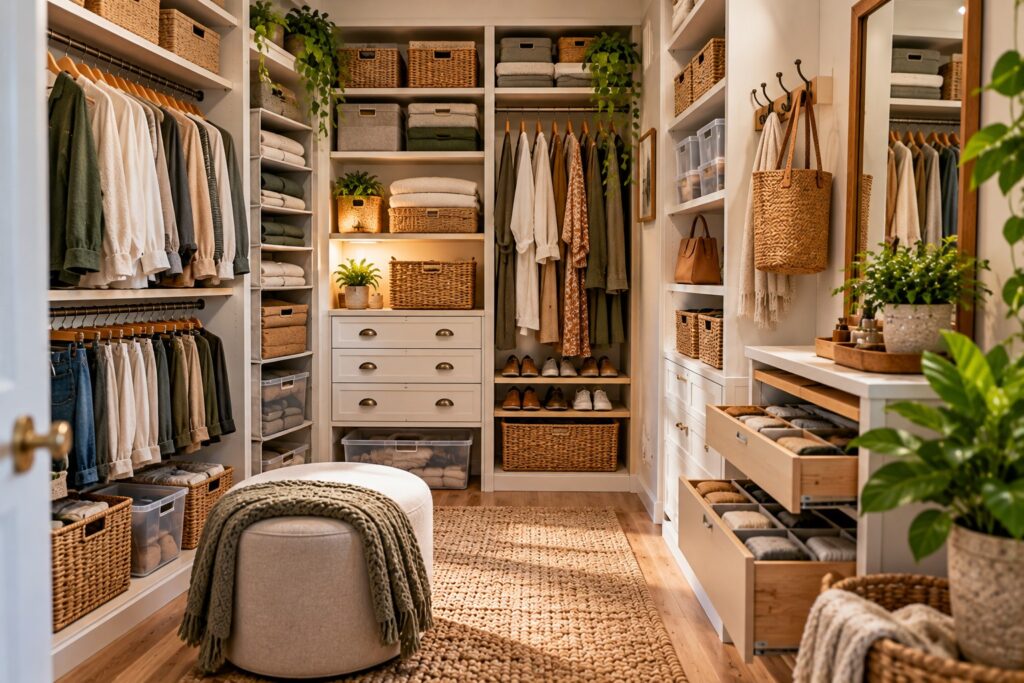
A short bookcase can leave several feet of unused wall above it. Tall shelving makes better use of the same footprint and gives you separate zones for everyday items and things you use less often.
Put baskets or matching bins on the highest shelves so those harder-to-reach areas still look tidy.
Why this works: It adds capacity without taking another inch of floor space.
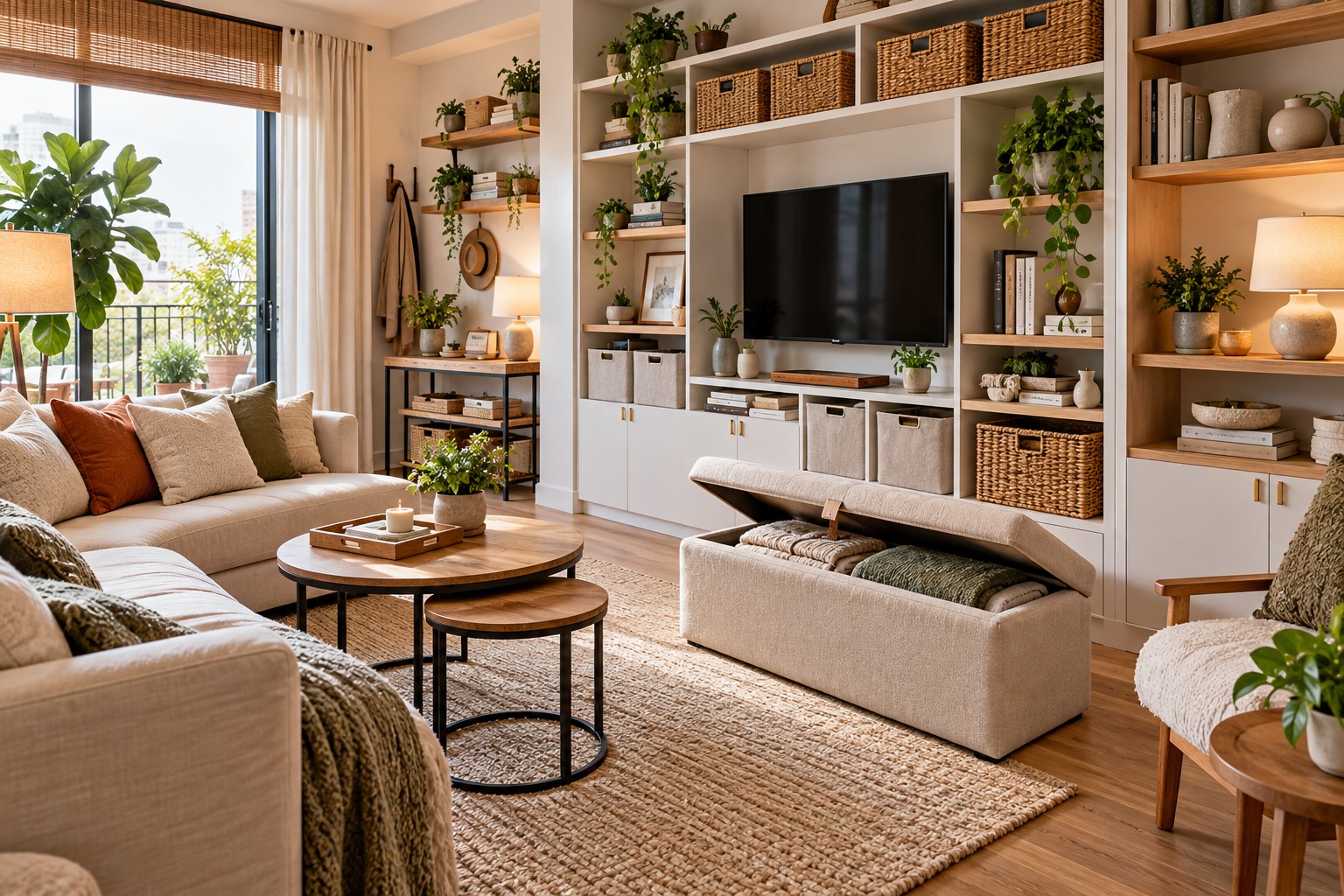
2. Put the Space Under the Bed to Work
The area beneath a bed can hold far more than a few forgotten shoes. Low rolling drawers, fabric zip cases, or lidded bins work well for spare bedding, seasonal clothing, bags, and less-used items.
Choose containers that slide out easily instead of packing the area with boxes that are difficult to reach.
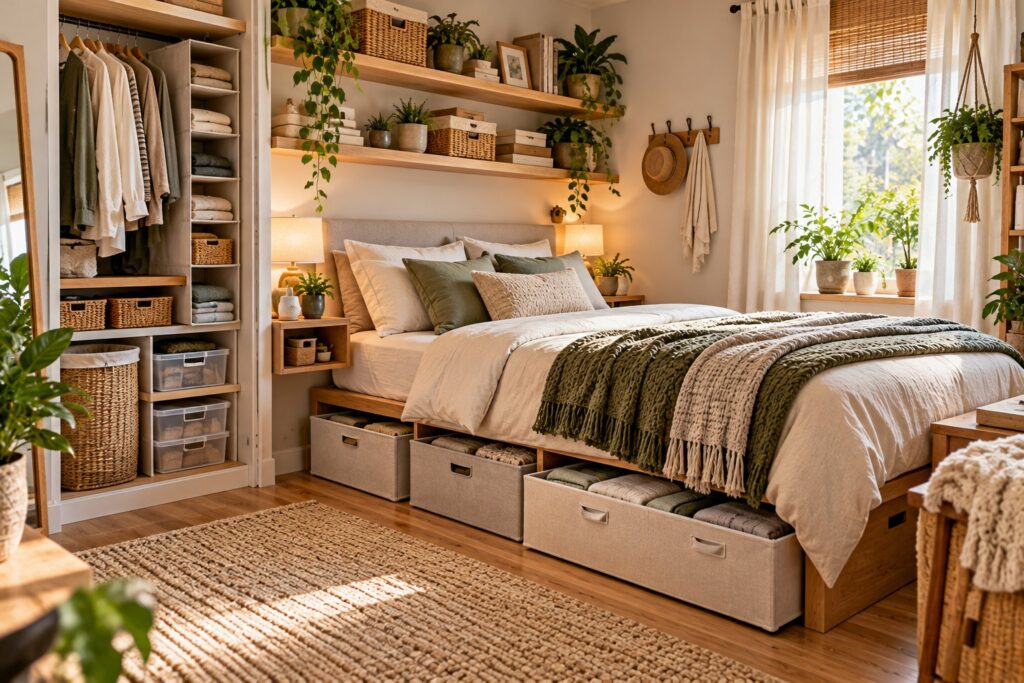
3. Use a Storage Ottoman Instead of a Standard Coffee Table
A storage ottoman can hold blankets, games, extra pillows, or everyday clutter while also serving as a footrest or occasional table.
In a tight living room, one piece doing two jobs is often more useful than adding another cabinet.
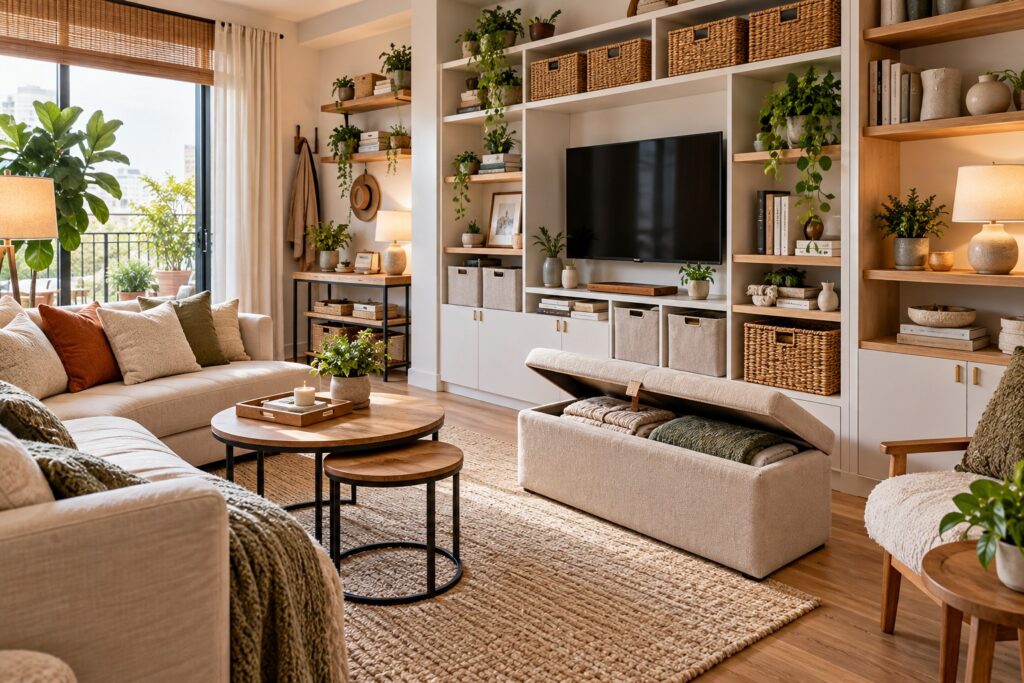
4. Add Shelves Above Furniture
The wall above a sofa, desk, dresser, or console is often completely unused. One or two floating shelves can hold baskets, books, small containers, or decorative objects without narrowing the room.
Keep the shelf depth modest so it doesn’t visually overwhelm the furniture below.
5. Turn the Back of a Door Into Storage
Bedroom, bathroom, pantry, laundry, and closet doors all offer useful vertical space.
An over-door organizer can hold shoes, toiletries, cleaning supplies, accessories, craft materials, or pantry items depending on the room.
Look for shallow designs that allow the door to close comfortably.
6. Build a Better Entryway Drop Zone
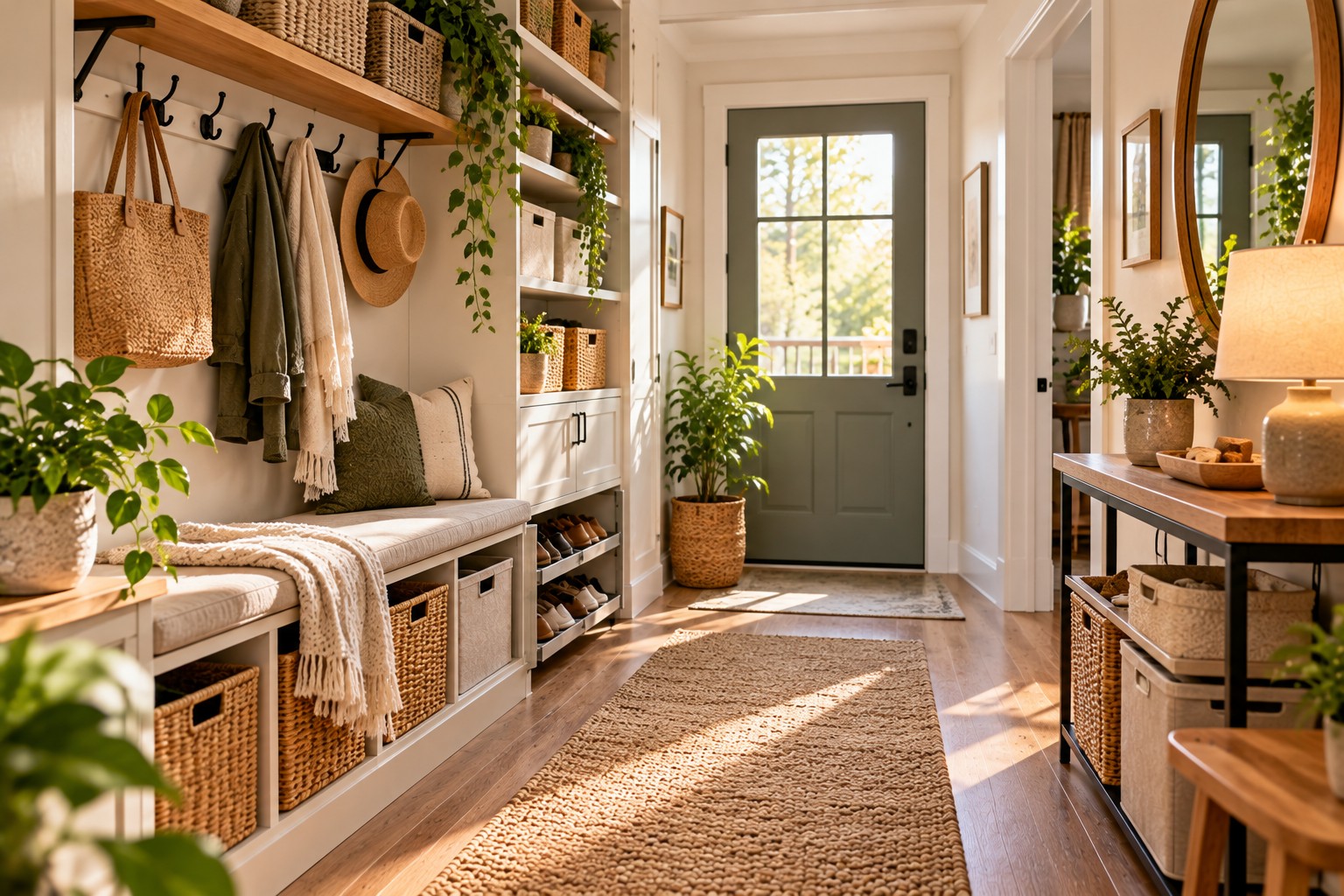
A small entry doesn’t need a large hall tree to stay organized. A narrow storage bench, a few hooks, baskets underneath, and a slim shelf above can handle shoes, bags, jackets, keys, and everyday items.
This is one of those places where even a small amount of dedicated storage can make the entire home feel more organized.
7. Choose Furniture With Hidden Storage
Beds with drawers, benches with lift-up seats, hollow ottomans, and coffee tables with compartments allow the furniture you’re already using to store something too.
I especially like hidden storage for items that tend to create visual clutter, such as chargers, blankets, games, paperwork, and extra linens.
8. Use Narrow Spaces Beside Appliances or Furniture
Small gaps beside a refrigerator, washing machine, desk, vanity, or cabinet may be wide enough for a slim rolling cart.
A narrow cart can hold pantry items, cleaning products, office supplies, toiletries, or laundry essentials while staying easy to pull out when needed.
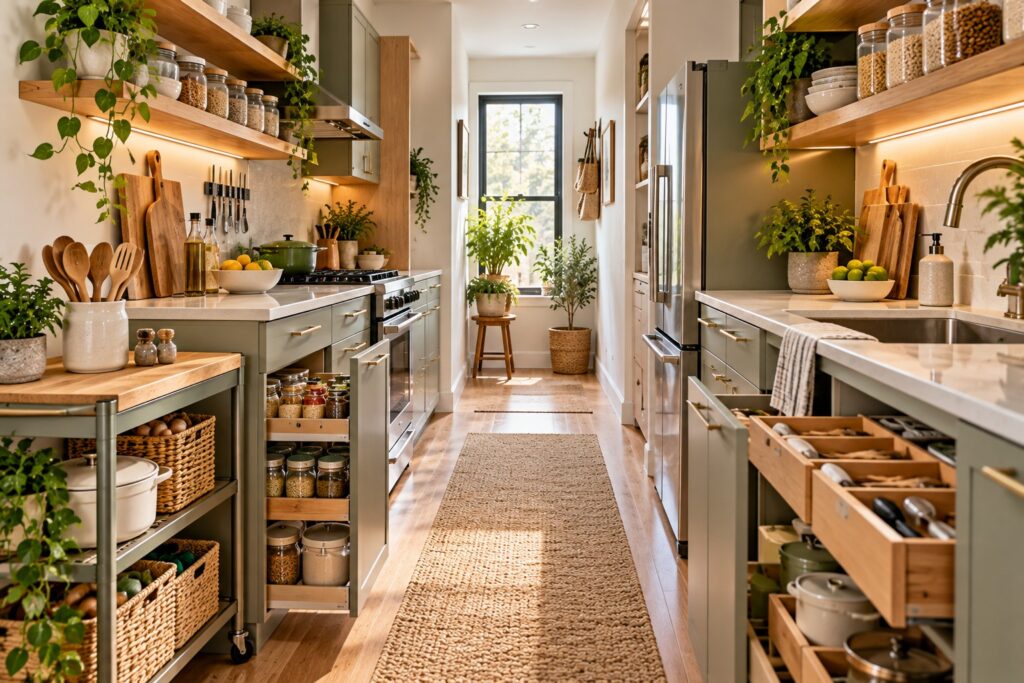
9. Divide Deep Drawers
A large drawer can waste space surprisingly quickly when everything gets piled together.
Drawer dividers and shallow trays create separate areas for smaller items and make it easier to use the entire drawer instead of only the top layer.
Why this works: Dividing the space makes the storage itself easier to see and use.
10. Add a Second Level Inside Cabinets
Kitchen and bathroom cabinets often have a large amount of unused vertical space between shelves.
Shelf risers create another layer for dishes, food containers, toiletries, or cleaning products without requiring any permanent changes.
This can be particularly useful in rentals.
11. Use Baskets on Top of Cabinets and Wardrobes
The gap above a wardrobe, kitchen cabinet, or tall shelving unit can store lightweight items you don’t need every day.
Large woven baskets work well here because they hide the contents and make high storage look intentional rather than forgotten.
Use them for seasonal linens, extra towels, seldom-used accessories, or lightweight household supplies.
12. Make Corners Earn Their Space
Corners frequently become empty pockets because standard furniture doesn’t fit them well.
A narrow corner shelf, floating corner shelves, compact cabinet, or small stack of baskets can turn one into useful storage without affecting the main walkway.
13. Give a Small Home Office Vertical Storage
A compact desk doesn’t leave much room for drawers and cabinets, so move storage upward.
Floating shelves, wall organizers, a pegboard, and small containers can keep supplies close while preserving the work surface.
Keep only daily essentials on the desk itself.
14. Use Storage Benches in More Than the Entryway
A storage bench can work at the foot of a bed, beneath a window, along a dining wall, or in a small living room.
Inside, it can hold bedding, toys, shoes, bags, seasonal items, or table linens. Add a cushion and it becomes useful seating too.
15. Create Storage Zones Instead of Scattered Containers
A small room can actually feel more cluttered when baskets and bins are spread everywhere.
Group storage into one or two deliberate areas, such as a shelving wall, entryway station, closet system, or cabinet zone. The rest of the room can stay more open.
Why this works: Concentrating storage creates visual breathing room and makes it easier to remember where things belong.
A Few Helpful Picks
When choosing storage products for a small space, a few details matter more than decorative extras.
- Look for slim proportions. Narrow shelving, shallow cabinets, and compact carts are easier to place without interfering with walkways.
- Choose stackable shapes. Straight-sided bins and boxes usually use shelf space more efficiently than curved containers.
- Mix open and closed storage. Open shelves keep everyday objects accessible, while baskets and bins hide less attractive items.
- Check dimensions carefully. Measure the height, width, and especially the depth of the available space before choosing a storage piece.
Product Suggestions

Click Image To View

Click Image To View

Click Image To View
Make It Feel Intentional
Use this quick checklist once the main storage is in place:
- Repeat two or three materials, such as warm wood, woven baskets, and soft neutral fabric.
- Leave some shelves partially empty instead of filling every surface.
- Use matching or coordinating containers in highly visible areas.
- Keep the floor as open as possible.
- Put everyday items at arm’s reach.
- Move seasonal and seldom-used belongings higher or lower.
- Add one plant, lamp, or decorative object to soften larger storage areas.
- Hide cords, packaging, and small miscellaneous items inside closed containers.
A small space usually feels calmer when the storage has a clear visual rhythm rather than dozens of unrelated containers.
Helpful Finds for This Style
Slim Shelving Units
A tall, narrow shelving unit adds useful vertical storage without using much floor area. Look for shallow depth, sturdy shelves, and a simple wood or powder-coated metal finish.
It works especially well in living rooms, bedrooms, home offices, and narrow entryways.
Woven Storage Baskets
Woven baskets hide everyday clutter while adding natural texture. Look for straight sides and sturdy handles so they sit neatly on shelves and are easy to move.
Seagrass, rattan, and similar natural textures work well with the warm, calm Nentz look.
Under-Bed Storage Bins
Low-profile containers turn otherwise unused floor area into concealed storage. Look for handles, lids, and dimensions that leave enough clearance beneath the bed.
Fabric styles work well for linens and clothing, while firmer containers can handle heavier items.
Storage Ottomans
A compact storage ottoman combines seating, a footrest, and concealed storage. Look for a hinged or removable top and upholstery in a versatile neutral fabric.
It’s particularly useful where there isn’t enough room for both a coffee table and extra storage.
Rolling Storage Carts
A narrow rolling cart can slip into small gaps and move wherever it’s needed. Look for a slim frame, several tiers, and wheels that move easily on your flooring.
These can work in kitchens, bathrooms, laundry areas, craft spaces, and compact home offices.
Floating Shelves
Floating shelves make use of empty wall space without adding bulky furniture. Choose a depth appropriate to the room and make sure the mounting system can support what you plan to store.
Warm wood shelves can also help a practical storage area feel more like part of the room.
Over-Door Organizers
An over-door organizer provides useful storage without requiring floor space. Look for shallow pockets, racks, or baskets that won’t interfere with the door.
They can be particularly helpful in closets, bathrooms, pantries, and bedrooms.
Cabinet Shelf Risers
Shelf risers create a second storage level inside a cabinet. Look for sturdy designs that fit the width and depth of your existing shelving.
They’re a simple way to make better use of tall cabinet interiors.
Storage Benches
A bench with built-in storage can replace several separate pieces of furniture. Look for cubbies, drawers, baskets, or a lift-up seat depending on what you need to store.
A compact design can work in an entryway, bedroom, dining nook, or beneath a window.
Drawer Dividers
Adjustable dividers help turn large drawers into smaller, more useful sections. Look for simple designs that can be repositioned as your storage needs change.
They’re useful anywhere small objects tend to collect into one messy pile.
Product Suggestions

Click Image To View

Click Image To View

Click Image To View
Start with one spot that already has unused space. Look above it, below it, and behind it before adding another piece of furniture.
Then make three simple moves:
- Choose one overlooked area.
- Give it one clear storage job.
- Keep the rest of the space open enough to breathe.