
*This post may contain affiliate links for which I earn commissions.*
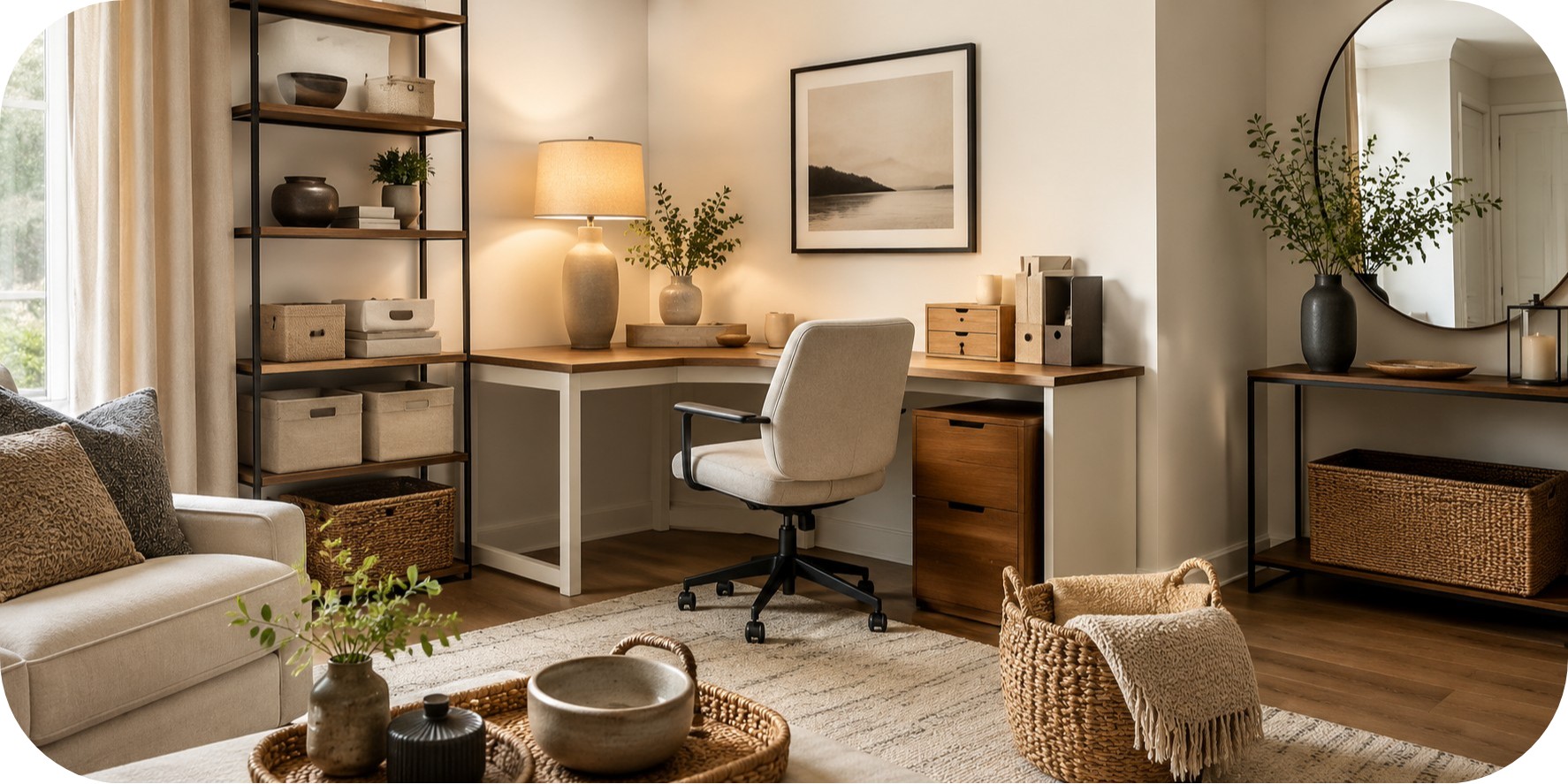
A quiet corner can become one of the most useful spots in a home when it’s planned with intention. Not a full room. Not a bulky office setup. Just a focused little workspace with the right desk shape, comfortable seating, soft lighting, and enough organization to keep the surface clear.
The best corner office layouts feel calm because everything has a purpose. The desk fits the wall, the chair has room to move, the lighting feels soft instead of harsh, and the storage stays close without crowding the space.
The Design Direction
A calm corner office starts with balance: compact furniture, warm materials, and a layout that doesn’t fight the room. Think a corner desk in light wood or soft white, a comfortable office chair, a warm desk lamp, and a few wall shelves that keep supplies within reach.
The palette should feel quiet but not cold. Cream, beige, warm gray, natural wood, matte black, and soft greenery all work well because they help the workspace blend into the room.
Texture matters too. A small area rug, woven storage, linen curtains, or a wood desktop can make the setup feel softer and more finished.
The goal is a workspace that feels focused during the day and still looks good when the laptop is closed. Why this works: when the desk, storage, lighting, and chair all fit the corner properly, the office feels like part of the home instead of a leftover work zone.
Ways to Bring This In
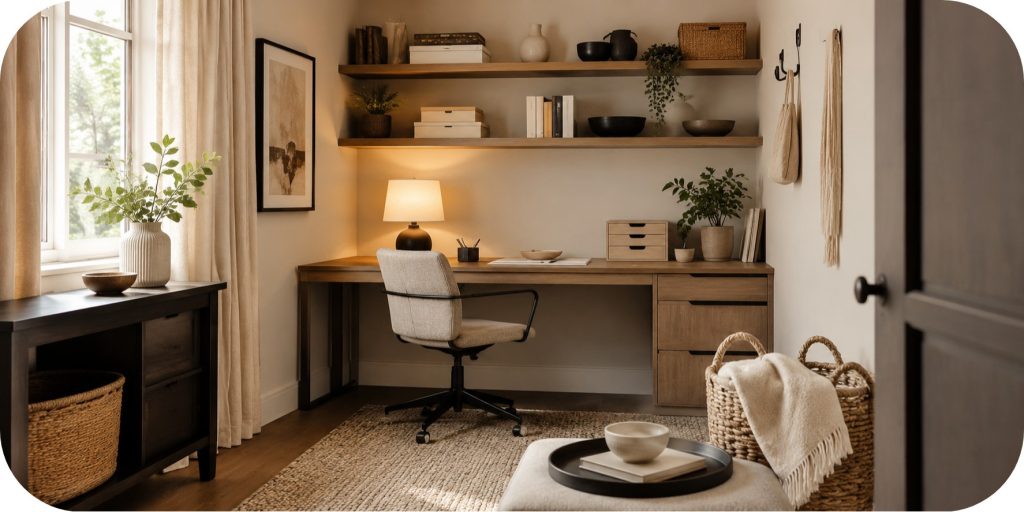
Use the corner as the anchor: Place the desk where two walls meet so the layout feels intentional. A corner desk or L-shaped desk can make better use of wall space than a standard desk floating awkwardly in the room.
Keep the desktop visually light: Choose a desk with clean lines, slim legs, or a warm wood finish. A bulky desk can make a small corner feel cramped before you even add a chair.
Choose a chair that looks good from the room: Since a corner office is often visible from a living room, bedroom, or hallway, the chair matters. Look for a supportive office chair with a softer profile, neutral fabric, or warm-toned frame.
Use one good desk lamp: A warm desk lamp adds task lighting without making the workspace feel clinical. Place it to one side so the light falls across the desktop instead of straight into your eyes.
Add wall shelves above the desk: Shelves are helpful when the floor space is limited. Keep them simple with a few storage boxes, a small plant, and one or two useful pieces rather than filling every inch.
Create a clear work zone with a rug: A small area rug can define the office corner, especially if the workspace sits inside a bedroom or living room. Choose a low-pile rug so the chair can still move easily.
Hide the cords early: Cable clutter can make even a nice desk setup feel messy. A cable management box, cord clips, or under-desk tray keeps the practical stuff from taking over the view.
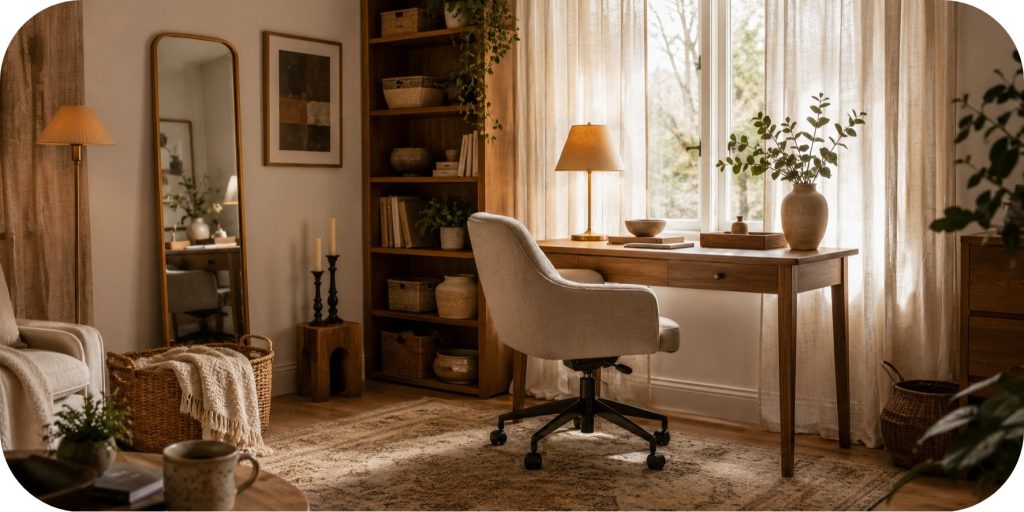
Use drawers instead of more desktop storage: A small filing cabinet or storage drawer unit gives papers, chargers, and notebooks a place to go. The desktop feels calmer when only the daily essentials stay out.
Bring in one soft natural detail: A small plant, greenery stems, or a ceramic vase can make the corner feel less rigid. One detail I particularly like is a small plant near the lamp because it softens all the hard lines around a desk.
Keep the wall view simple: A framed print, pinboard, or small mirror can give the corner a finished look. Avoid making the wall too busy, especially if the desk is already holding office tools.
Leave breathing room around the chair: The layout should let the chair pull out comfortably. Even a beautiful desk setup feels frustrating if the chair keeps hitting a wall, bed, or cabinet.
Repeat materials from the rest of the room: If the room already has warm wood, black accents, or woven texture, bring one of those details into the office corner. It helps the workspace feel connected instead of added later.
Quick Finds to Match This Look
A corner desk is the first piece to consider because it sets the shape of the whole workspace. Look for a size that fits the wall without blocking walkways or making the corner feel heavy.
A desk lamp is another simple piece that changes the feel of the setup quickly. Warm light makes the corner feel more inviting, especially if the office is used early in the morning or later in the evening.
A cable management box helps keep the setup visually calm. It’s not the most exciting piece, but it makes a big difference once chargers, cords, and power strips start showing up.
Product Suggestions

Click Image To View

Click Image To View

Click Image To View
Polishing Moves
Keep only daily-use items on the desktop
Use one tray or organizer instead of several small containers
Choose warm white bulbs for a softer workspace glow
Keep shelves partly open so the wall doesn’t feel crowded
Place storage drawers on the side that feels easiest to reach
Use matching or coordinated storage pieces for a cleaner look
Add one plant or greenery detail for softness
Check the chair clearance before finalizing the layout
Pieces That Pull It Together
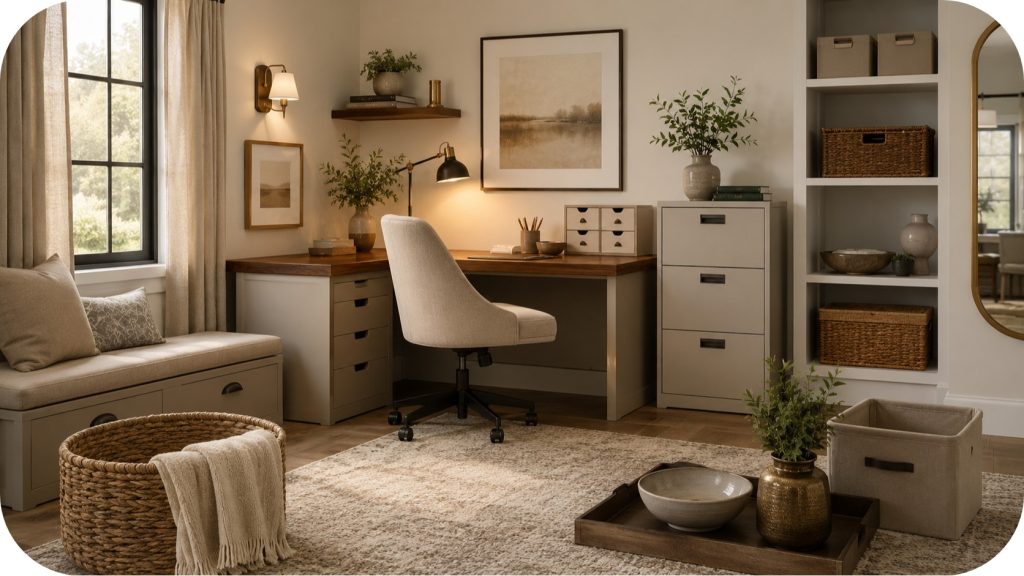
A corner desk is the foundation of the layout. Look for a compact L-shape, floating corner design, or clean-lined desk that fits the wall without overpowering the room.
It supports the calm workspace vibe by making the corner feel planned instead of squeezed in.
An ergonomic office chair adds comfort for longer work sessions. Look for adjustable height, supportive back shape, comfortable cushioning, and a style that still feels visually soft enough for a home setting.
It helps the setup feel functional without making the corner look too corporate.
A desk lamp gives the workspace focused lighting. Look for a warm shade, adjustable arm, ceramic base, wood detail, or slim metal profile.
It supports the look by adding a softer glow and making the desk feel more finished.
Wall shelves add vertical storage without using floor space. Look for simple wood, white, or black shelves with clean brackets and enough depth for small storage boxes or décor.
They help keep the desktop clear while adding structure above the workspace.
A desk organizer keeps small supplies contained. Look for wood, metal, acrylic, ceramic, or fabric-covered organizers with divided sections for pens, notes, and small tools.
It helps the corner feel tidy without making the desk look empty.
Filing cabinet or storage drawers
A filing cabinet or drawer unit gives papers and office supplies a hidden place to land. Look for compact drawers, rolling storage, slim filing units, or wood-front styles that fit under or beside the desk.
It supports the calm feel by reducing visible clutter.
An area rug helps define the workspace. Look for a low-pile rug in a neutral tone, subtle pattern, or woven texture that still lets the chair move smoothly.
It makes the office corner feel like a designed zone within the larger room.
A cable management box hides cords, chargers, and power strips. Look for a ventilated design, neutral color, and size that fits the number of cords you actually use.
It supports the clean look by removing visual clutter from the floor and desktop.
Product Suggestions

Click Image To View

Click Image To View

Click Image To View
A calm corner office doesn’t need a huge footprint to work well. Start with the desk position first, then add one piece that solves the biggest daily frustration, whether that’s lighting, chair comfort, storage, or cable clutter.
Once that one detail is handled, the whole corner starts to feel more intentional.