
*This post may contain affiliate links for which I earn commissions.*
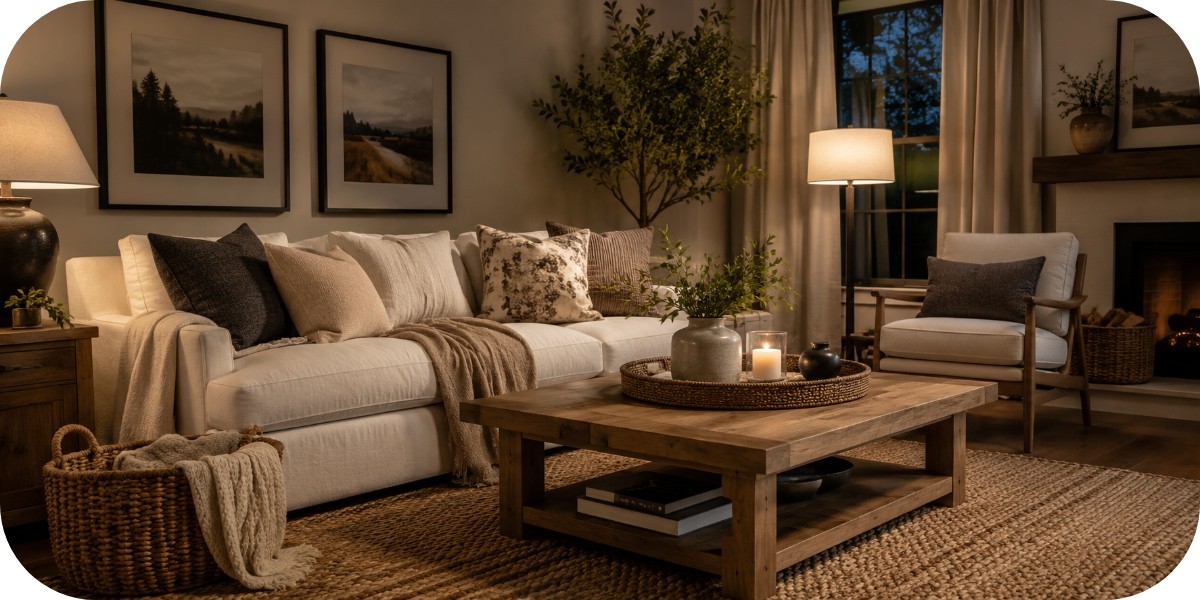
A living room can feel completely different without replacing every piece of furniture. A thoughtful layout, warmer lighting, and a few carefully chosen décor updates can turn a space that feels disconnected into one that feels comfortable, balanced, and inviting.
This Before & After transformation shows how a dated living room can become a cozy, refined space through strategic changes. By improving the furniture flow, adding layers of texture, and choosing pieces that support the room’s purpose, the space feels refreshed while still practical for everyday living.
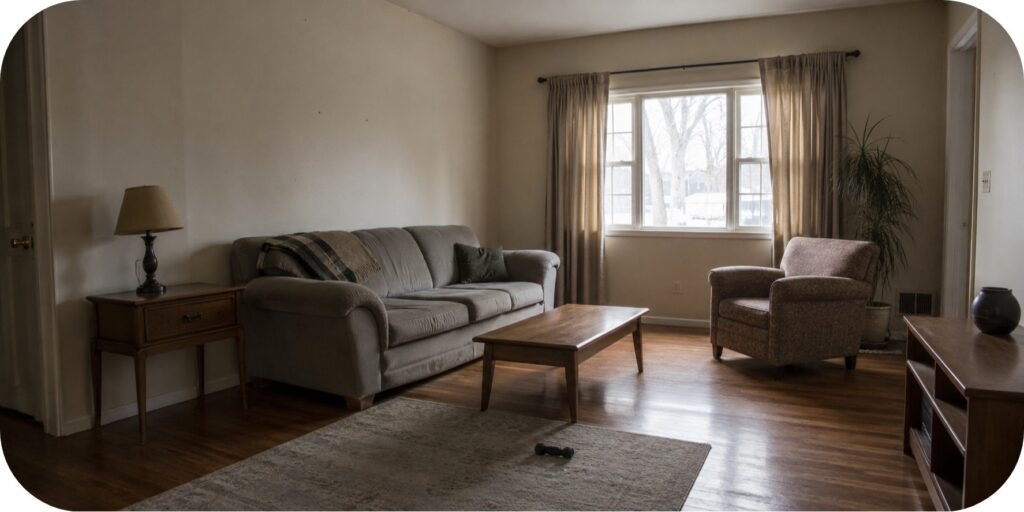
The Starting Point
The original living room had potential, but the space felt a little unfinished. The furniture arrangement didn’t create a strong gathering area, and the room lacked the warmth that makes a living space feel comfortable.
The color palette felt flat, with limited contrast and few textures to create depth. Individual pieces worked on their own, but they didn’t feel connected as part of one overall design.
The goal wasn’t to start over. It was about making smarter choices with the existing space and creating a room that felt more welcoming, functional, and visually balanced.
The Target Look
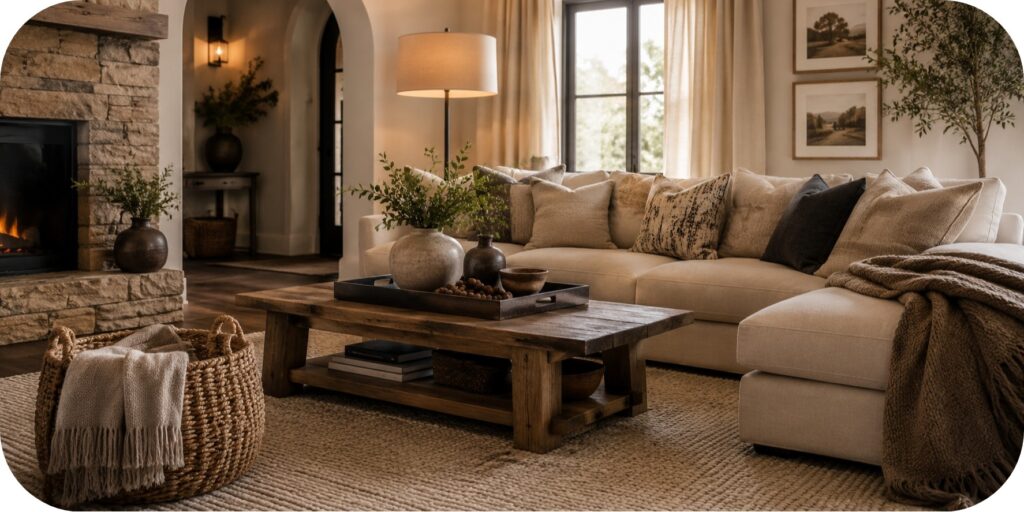
The refreshed living room was designed to feel cozy, calm, and thoughtfully styled without becoming overly formal.
Warm neutrals such as cream, beige, taupe, and soft charcoal create a relaxed foundation. Natural wood tones, woven textures, and subtle greenery add layers that make the room feel comfortable and lived-in.
The seating area became the heart of the room, with furniture arranged to encourage conversation and everyday relaxation. Softer lighting and carefully selected décor pieces helped create a warmer atmosphere from morning through evening.
Product Suggestions

Click Image To View

Click Image To View

Click Image To View
The Biggest Shifts
Creating Better Flow
The first major change was improving the furniture arrangement. Instead of leaving pieces separated around the room, the seating was grouped together to create a more connected and functional layout.
An accent chair added flexibility while keeping the room open, and the coffee table helped anchor the seating area. The result was a space that felt easier to use and more inviting for guests.
Why This Works:
A room feels more comfortable when the layout supports how people naturally move and gather. Good furniture placement can make the entire space feel more intentional.
Adding Texture and Warmth
The next update focused on bringing more depth into the room. A textured area rug created a foundation for the furniture, while soft throw pillows and curtains added layers without making the space feel busy.
Natural materials helped balance the neutral palette. Woven baskets introduced practical storage, while wood accents added warmth and a connection to organic elements.
One detail I particularly like is how texture can completely change the mood of a room without needing dramatic colors or major renovations.
Why This Works:
A mix of fabrics, natural fibers, wood, and softer surfaces creates visual interest and makes a room feel more comfortable.
Refining the Styling Details
The final changes focused on the pieces that brought everything together. Wall décor added personality, while decorative baskets helped keep everyday items organized and visually tidy.
Floor lighting replaced some of the harshness of overhead lighting and created a softer evening atmosphere. The room felt finished without feeling overcrowded.
Why This Works:
The best rooms balance style and function. Thoughtful details help a space feel designed while still allowing it to feel relaxed and personal.
The Shopping List for This Transformation
The right pieces can help recreate the feeling of this living room makeover. Some improve comfort and layout, while others add the finishing layers that make the room feel complete.
Must-Haves
Area rugs
Choose a rug large enough to connect the main seating pieces. Soft textures, subtle patterns, and warm neutral shades can help define the room while adding comfort underfoot.
Accent chairs
Look for a chair with comfortable proportions and textured upholstery. A well-placed accent chair can create additional seating while adding shape and personality to the room.
Coffee tables
Select a coffee table that fits the scale of the seating arrangement. Wood, stone, or mixed-material designs can add warmth while providing a practical surface for everyday use.
Floor lamps
A floor lamp can soften the room’s lighting and brighten darker corners. Look for designs with warm finishes and adjustable features for both function and atmosphere.
Throw pillows
Use a mix of sizes, fabrics, and neutral tones to add comfort and subtle visual interest without overwhelming the sofa.
Nice-to-Haves
Curtains
Light-filtering curtains can soften windows, add texture, and make the room feel more finished while allowing natural light to remain part of the design.
Wall décor
Choose artwork, mirrors, or decorative pieces that complement the room’s colors and help create a stronger focal point above furniture.
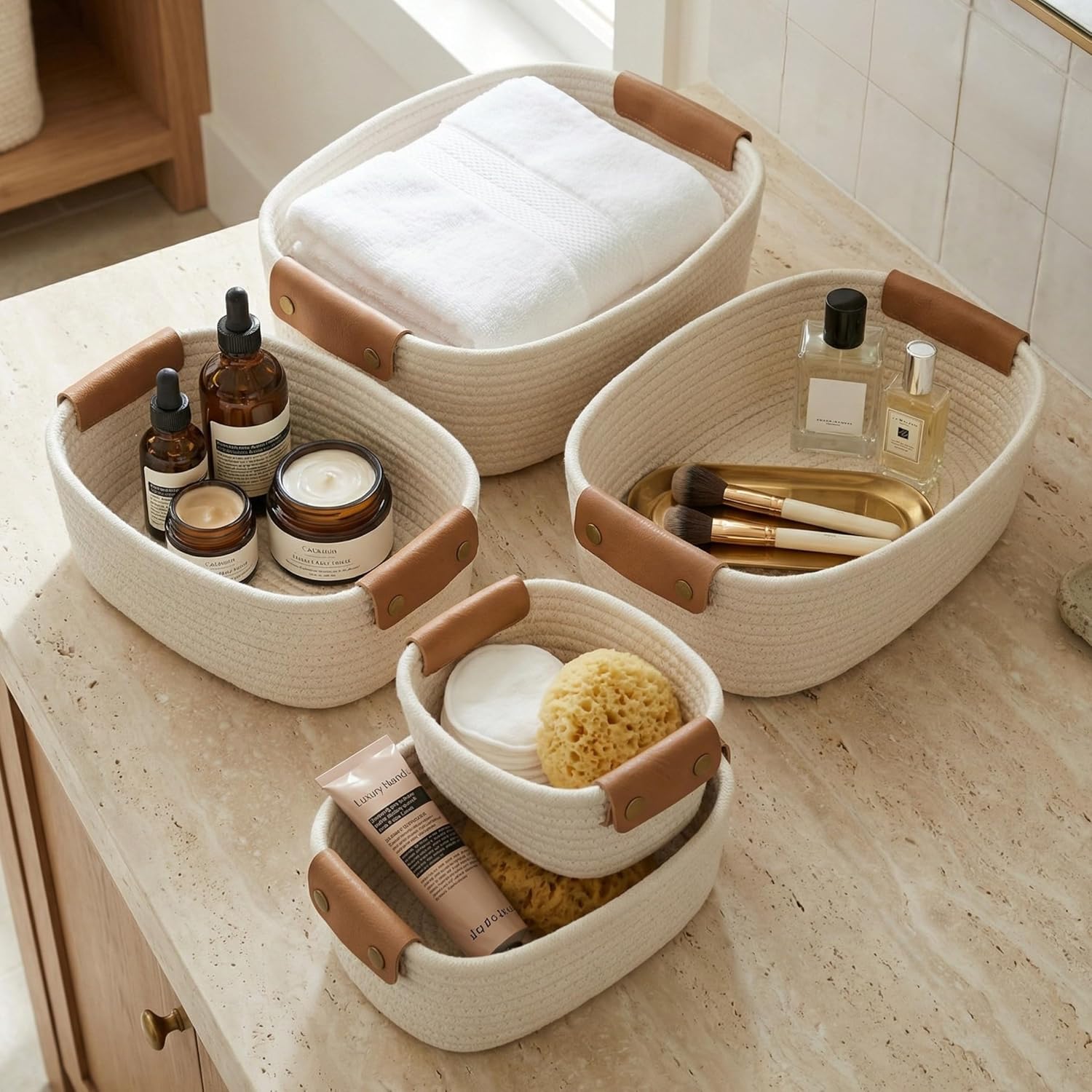
Decorative baskets
Woven baskets provide attractive storage for blankets, magazines, and everyday items while adding natural texture to the room.
Product Suggestions

Click Image To View

Click Image To View
Click Image To View
Tiny Tweaks, Big Impact
Small finishing details helped complete the refreshed living room.
Adding greenery introduced a natural element that worked beautifully with the warm neutral palette. A tall plant in a ceramic planter can add height to an empty corner while making the room feel more connected to nature.
A styled coffee table can also make a noticeable difference. A simple tray, a stack of books, or a textured decorative object adds personality while keeping the surface practical.
Layered lighting is another detail that changes how the room feels. Combining floor lamps, table lamps, and natural window light creates a softer atmosphere throughout the day.
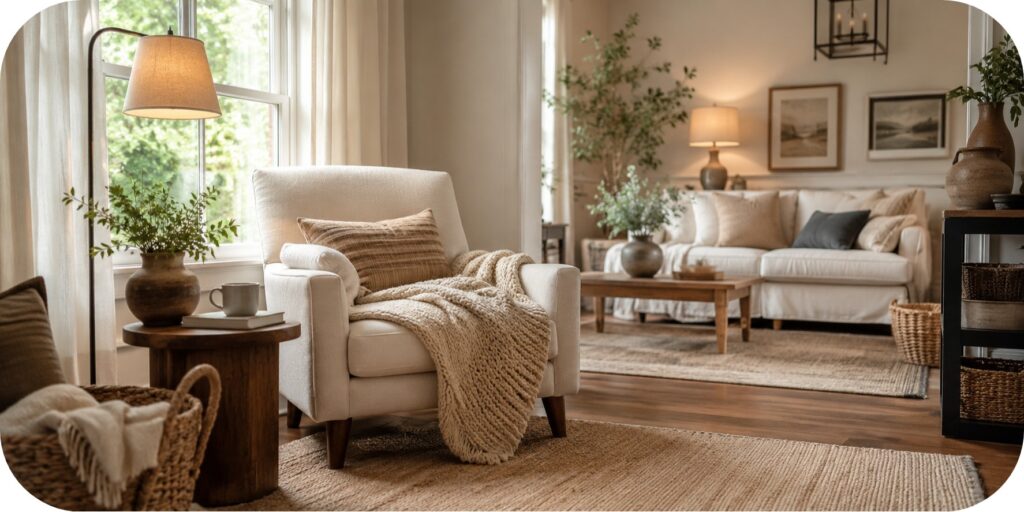
Storage pieces also play an important role. A woven basket beside the sofa keeps blankets or extra pillows nearby while maintaining a clean, organized look.
The final touch is knowing when to stop. Leaving some open space allows the furniture and décor pieces to stand out instead of competing for attention.
Your Next Move
A living room glow-up doesn’t require replacing everything at once. The most successful transformations usually come from understanding what the room needs and making updates that improve comfort, function, and style together.
Start with the change that will have the biggest impact. It might be rearranging the furniture, adding warmer lighting, or introducing more texture through rugs and fabrics.
Small improvements can create a completely different feeling over time.
What part of your living room would you update first to create a warmer, more inviting space?